4 big ideas to transform early childhood education (and the world)
What if the most powerful lever for the future of early childhood education — and the world — isn't policy, or technology, or business, but a room full of young children and the educators guiding their play?
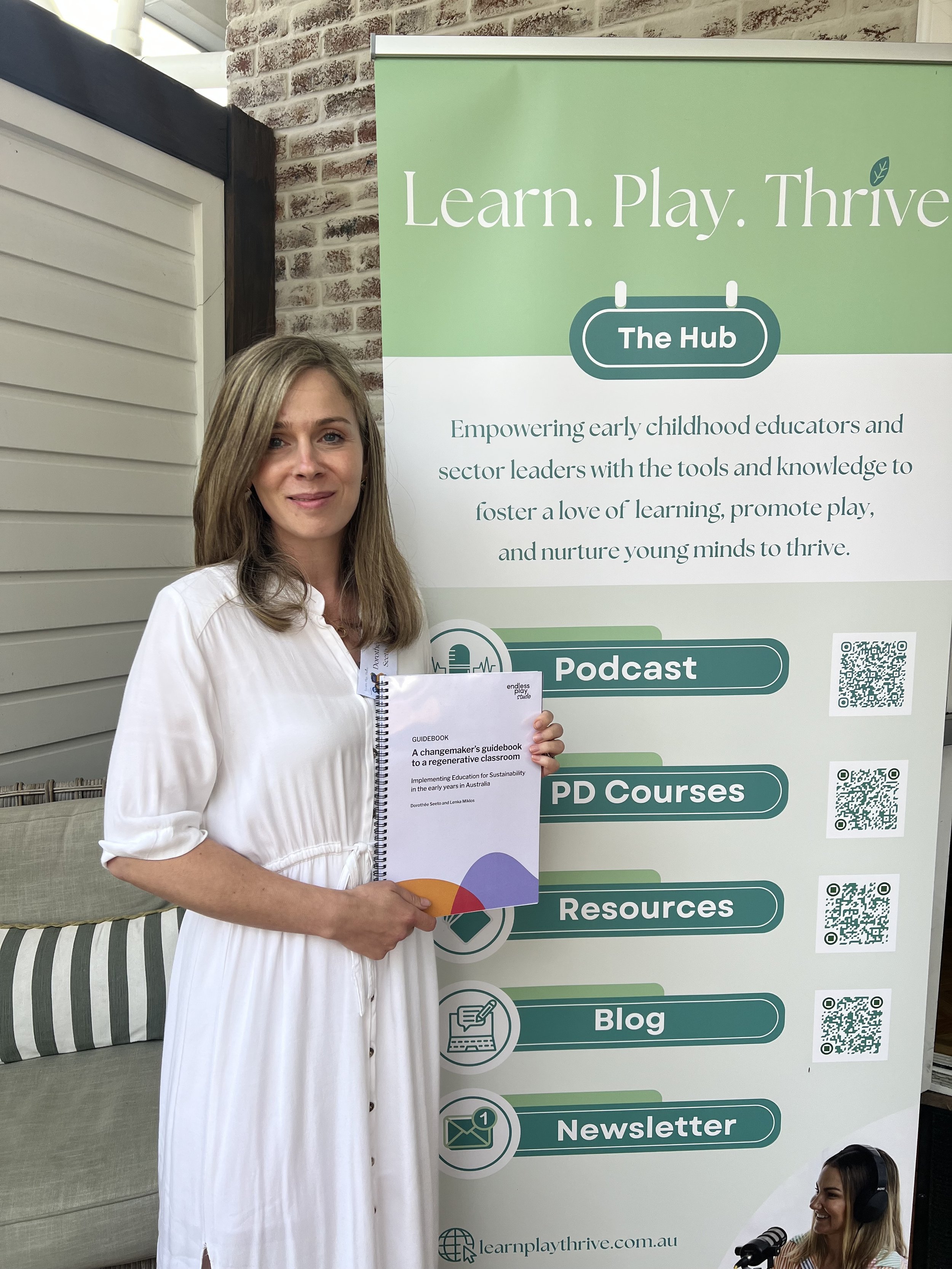
I walked out of the Pedagogy in Practice conference organised by Learn Play Thrive Australia feeling genuinely energised by the clear, unified message that emerged from every single presentation: we already have more power to transform early childhood education than we think, from the inside out. And the changes we can make are within everyone's reach.
Major systemic reform is still needed — absolutely. But while we wait for that, there is much we can do. Here are four big ideas that solidified for me thanks to outstanding presentations by Colin Slattery from Semann & Slattery, Dr Gai Lindsay, Associate Professor Kate Highfield, Jessica Staines from Koori Curriculum, Kirsty Liljegren from the Creative Collection and Amelia Scarf from Rhymey.
These 4 big ideas are also — not coincidentally — what we need to raise the sustainable citizens our world needs.
1. Be experts in pedagogy and going with the flow
One of the most liberating ideas of the day came from Kirsty Liljegren: think of yourself not as a planner of content, but as a ‘designer for learning possibilities’.
When we feel we must be experts in every topic — sustainability, STEM, First Nations perspectives, the arts — we set ourselves up for exhaustion and imposter syndrome. When we position ourselves as experts in how children learn, we free ourselves to follow their curiosity wherever it leads. As Dr Gai Lindsay puts it: ‘start with the children's interests, not the theme of the month’, and be a co-learner alongside them. Your role isn't to have all the answers — it's to be, as Kirsty Liljegren beautifully says, a ‘germinator of children's thinking.’
Hold strong intentions, follow the children's flow. We don't need rigid plans — children's interests change constantly and detailed programs can feel like swimming against the current. What we need are clear, shared intentions. Sustainability is a perfect example: you don't need a dedicated sustainability session. You need clear intentions — like helping children understand where things come from, how they are made, and where they go at the end of their lives — and then the skill to spot where those intentions can come alive in everyday play.
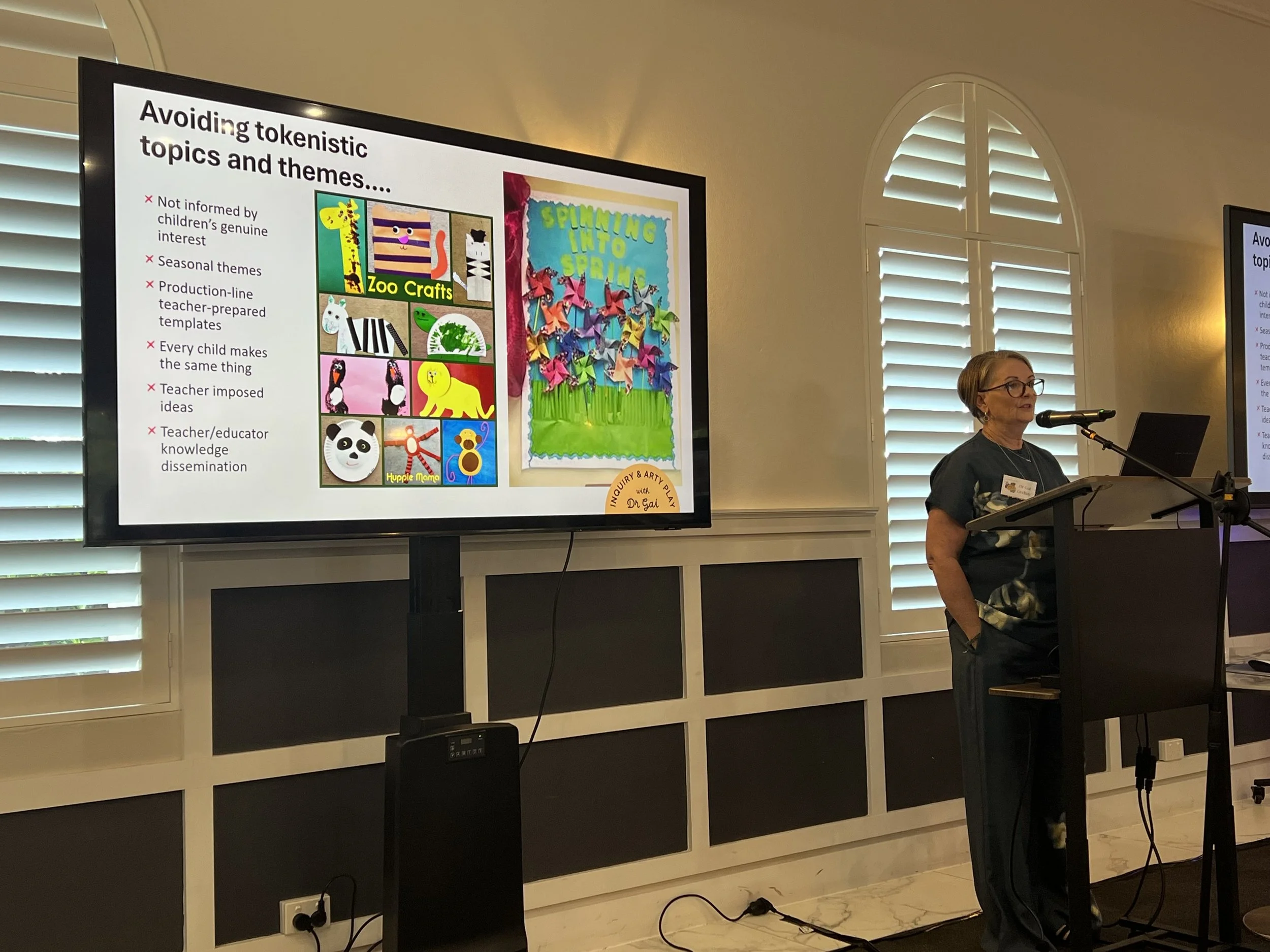
Be the lead inquirer. Dr Gai Lindsay described the educator's role as ‘lead inquirer’ — not the person with the answers, but the person most enthusiastically engaged in asking questions. When a child asks something you can't answer, find out together. Model what genuine curiosity looks like.
Prioritise thinking over knowledge. Associate Professor Kate Highfield, Kirsty Liljegren and Dr Gai Lindsay all made the case for deep thinking skills — questioning, problematising, ‘possibility thinking’ (Anna Craft) — being more important than facts. Be the provocateur: ask ‘why do you think?’ and ‘what if?’ more than ‘can you tell me what this is?’ These are the capacities children need for life and for a sustainable future.
Take a place-based approach. As Jessica Staines reminds us, the local environment is one of the richest and most underused learning opportunities available. Following the flow of place makes learning contextual and relevant, and deepens children's connection to the natural world and their community — which is also, at its heart, education for sustainability in action.
Embrace productive failure. Associate Professor Kate Highfield emphasises that getting things wrong is not a detour from learning — it is learning. When educators model comfort with uncertainty, they give children permission to take risks and think boldly — a competency critical for a sustainable future.
You don't need to be an expert in sustainability to teach it powerfully. You need to be an expert in curiosity.
2. Holistic thinking is the lifeline you've been looking for
Here's something worth sitting with: you’re already trained to think about children holistically. You do it every day. And yet, when it comes to curriculum, teams and systems, most of us default back to siloed thinking — separating sustainability from art, STEM from play, leadership from pedagogy.
This is a byproduct of the education system that shaped us as children. But you are now in charge of educating the next generation — which means you have real power to change it.
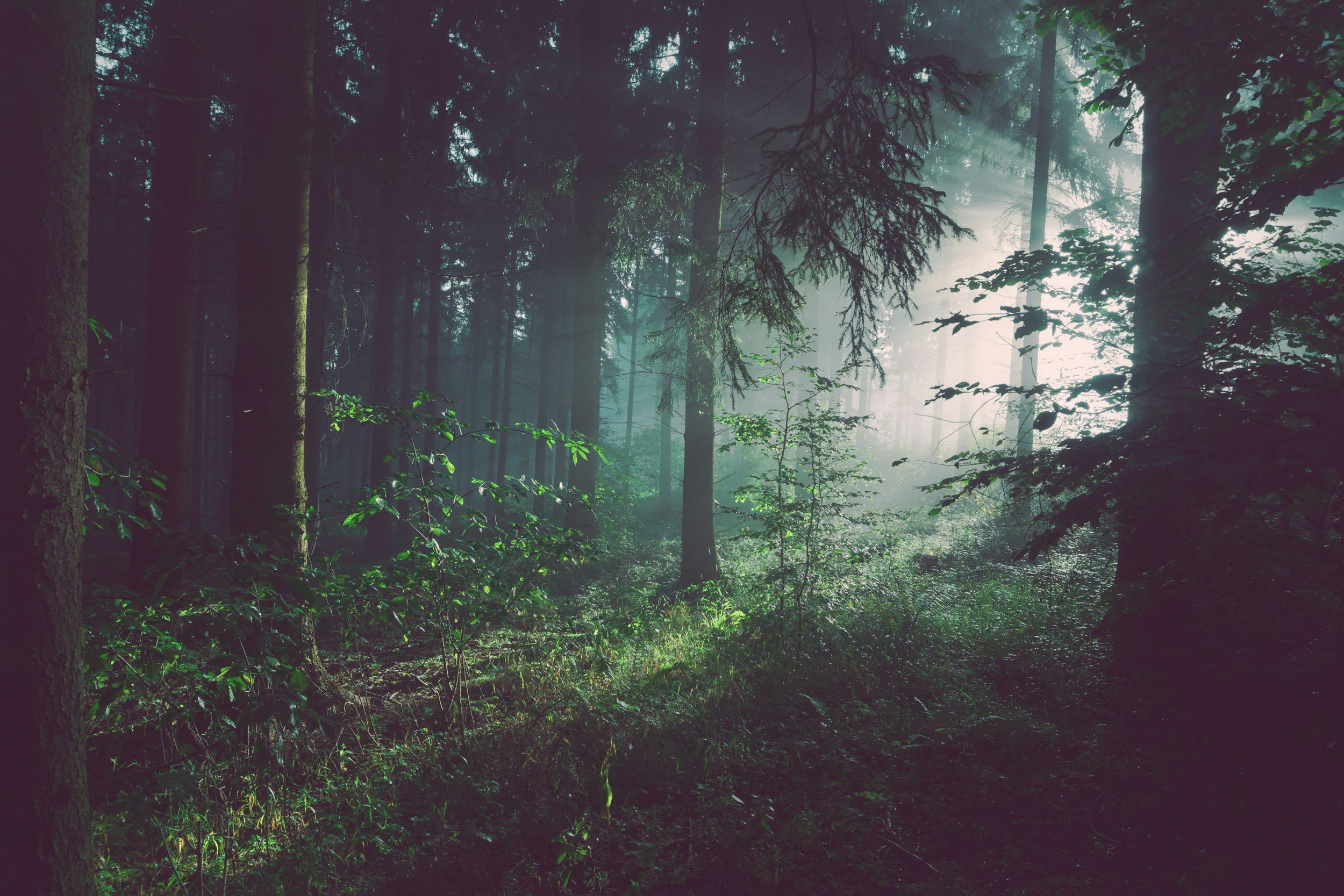
Colin Slattery pleaded for the development of our capacity to think systemically. The natural world doesn't work in silos — it works holistically through intersecting relationships between different things, in endless feedback loops. When you study how a forest functions, you realise it's not the individual plants, animals and fungi that determine the health of the ecosystem, but the quality of the relationships between them. Early childhood education works exactly the same.
What does holistic thinking look like in an early years setting?
Thinking about the whole child. Amelia Scarf from Rhymey made a beautiful example of music — which benefits the whole child across every dimension of development. Thinking holistically also means recognising that educator wellbeing is inseparable from children's wellbeing.
Connecting across the whole curriculum. ‘Don't put subjects into silos’, pleads Dr Gai Lindsay — a thread that ran through almost every session of the day. No matter where you start — the arts, First Nations perspectives, STEM, music — the richest learning happens when you look for the connections.
The EYLF 2.0 is written to be used holistically. When we weave sustainability, Aboriginal and Torres Strait Islander perspectives, art, mindfulness, STEM and more together, it's more powerful for children and easier for educators.
A whole-of-team approach. ‘Let's not leave art to the artsy educators only’, Dr Gai Lindsay pleaded — and the same applies to sustainability, Aboriginal and Torres Strait Islanders perspectives, and any area that tends to get quietly delegated to whoever already cares about it. A culture of sustainability doesn't require every educator to be a passionate environmentalist, but it needs the confidence of a shared vision so that every educator can contribute in ways that play to their strengths. When the whole team moves in the same direction, everything starts to flow — reducing effort, burnout and failure.
3. You aren't teachers — you are powerful leaders
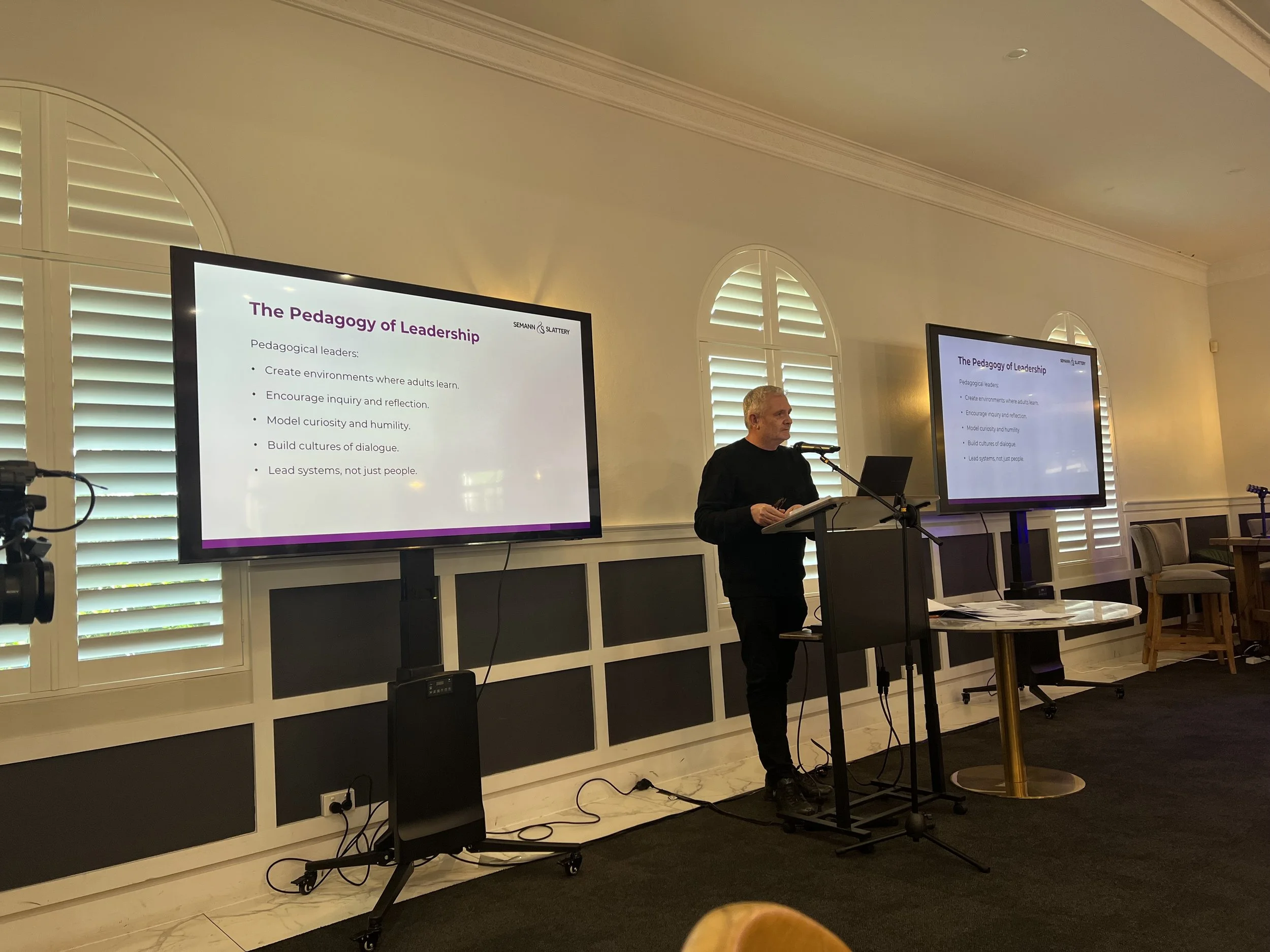
Colin Slattery opened the day with a keynote on the ‘pedagogy of leadership’ which set exactly the right tone. Before we can talk about what we teach or how we teach it, we need to reckon with the fact that everything we do — every choice, every interaction, every story we tell — is an act of leadership.
‘All educators are leaders’, Colin Slattery says, ‘because we are constantly modelling not just to children, but to each other’.
Consider the reach of your influence on any given day:
On the children in your care — through the intentions you set, the pedagogies you choose, the behaviours you model, and the stories you share.
On your colleagues and organisational culture — through how you live your centre's values, how you show up in difficult conversations, and what kind of professional you choose to be.
On the early education system itself — through what you accept, what you challenge, and what you're willing to fight for.
On the future — what competencies, attitudes, values and worldviews are you nurturing in children today to help bring the world we need to life?
Leadership isn't about your title. It's about being clear on your values and vision, and making decisions that reflect them — even when that's hard.
What kind of influence do you want to have?
4. Children are your best teachers
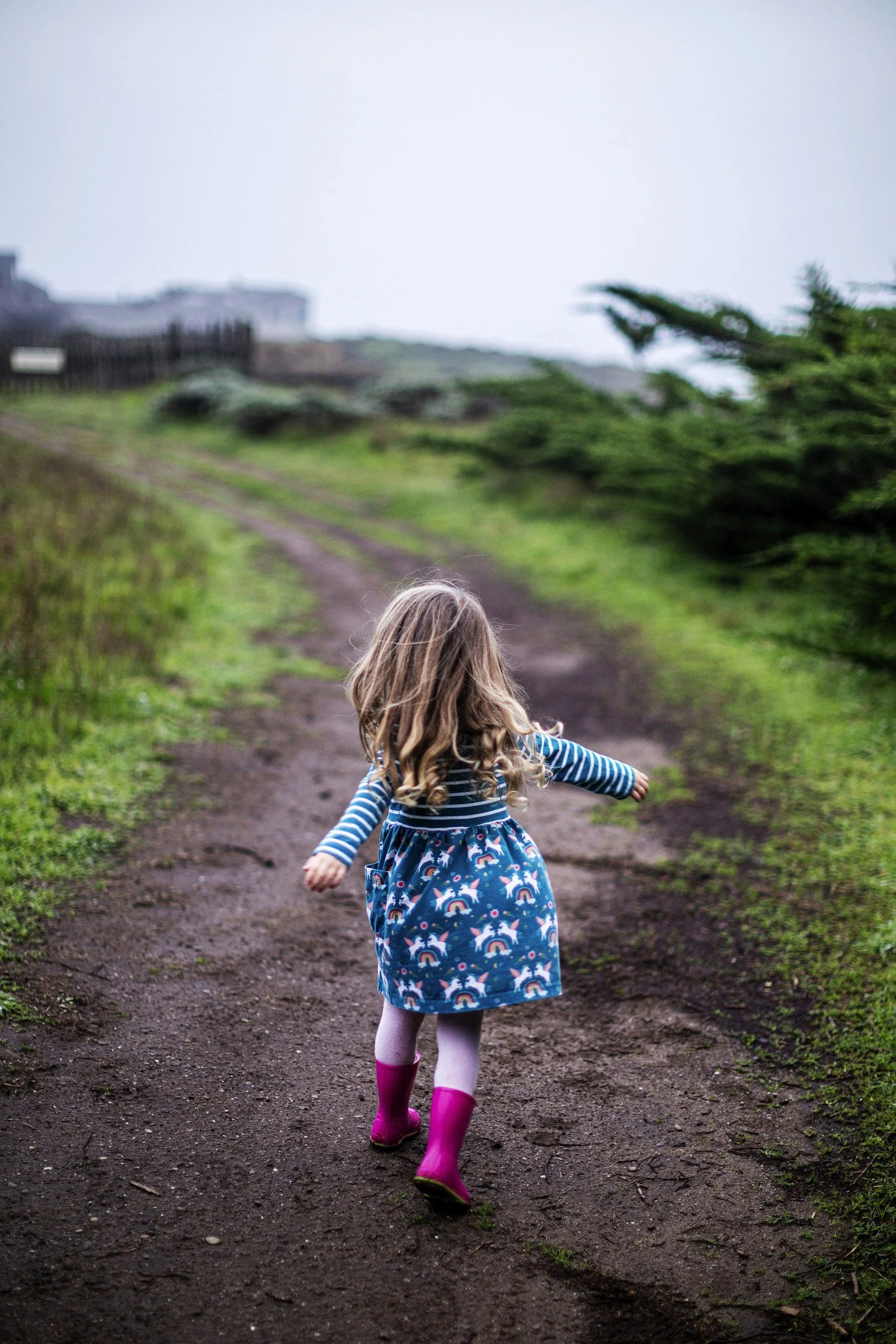
The final — and perhaps most quietly radical — idea of the day: children are your best teachers.
Young children ask questions without embarrassment. They try, fail, and try again without harsh self-judgment. They follow what genuinely interests them and slow down for what matters. They find wonder in the ordinary. And they shut down when they don't feel safe.
But as adults? We hesitate to ask questions for fear of looking unknowledgeable. We treat failure as something to hide. We rush through experiences to tick boxes. We expect others to perform at their best even when they don't feel safe.
What would we do differently if we considered the four-year-old in each of us?
Slow down. Rushing through learning, documentation and conversations with children means missing the moments that matter. Slowing down often means doing less — so we think critically about what actually matters and how to work smarter.
Create psychological safety. Children learn best when they feel safe to take risks. So do educators. Build a team culture where it's genuinely okay to say ‘I don't know’, try something new, and reflect honestly when something doesn't work.
Embrace uncertainty and experiment. Give it a go, refine as you go, and extend yourself the same compassion you'd extend to a child who is learning. These are also competencies we need to grow in children for a sustainable future — the willingness to try, adapt and keep going in the face of complexity.
The children in your care are not just the recipients of your teaching, but also your most honest mirrors, your most enthusiastic collaborators, and — if you let them — your best teachers.
The transformation starts with you
Early childhood education sits at a remarkable intersection: it is where the citizens of tomorrow are first learning how to think, how to relate, and how to be in the world. That makes everything in this article — leadership, holistic thinking, pedagogy, learning from children — an act of education for sustainability, whether we call it that, or not.
These four ideas aren't new. You've probably felt their truth in your bones for a long time. What the Pedagogy in Practice conference did was remind us that you are already a leader, an expert in pedagogy, and a systems thinker in the making. And you are already surrounded by the best teachers in the world. The question is simply: what will you do with that?
—
If you're ready to take the next step, Endless Play Studio supports early childhood educators to turn everyday play into learning for a sustainable future — let’s talk about how we can help: book a call here!